

How can real estate agents use AI?
Start with administrative and marketing work that a person can review: listing copy, property brochures, enquiry triage and client follow-up. Use AI to organize information, not to invent property features, decide who should be offered housing or replace a qualified valuation. The following tools serve different parts of an agent's workflow.
| Tool | Practical use | Required human check |
|---|---|---|
| ChatGPT | Draft a listing from verified facts | Floor area, condition, amenities and claims |
| Claude | Organize notes and draft a client briefing | Accuracy and confidential information |
| Canva | Design flyers, listing presentations and social posts | Image rights and accurate representation |
| Zapier | Route enquiries and prepare follow-up tasks | Permissions, duplicates and approvals |
| RealTeasy | Explore indicative property information where supported | Independent evidence and qualified valuation |
RealTeasy is a specialized listing in the directory. Its estimates are not professional valuations. Verify geographic coverage and current features on the provider site before relying on it. The other products are general tools applied to a real estate workflow.
1. Draft a listing without inventing details
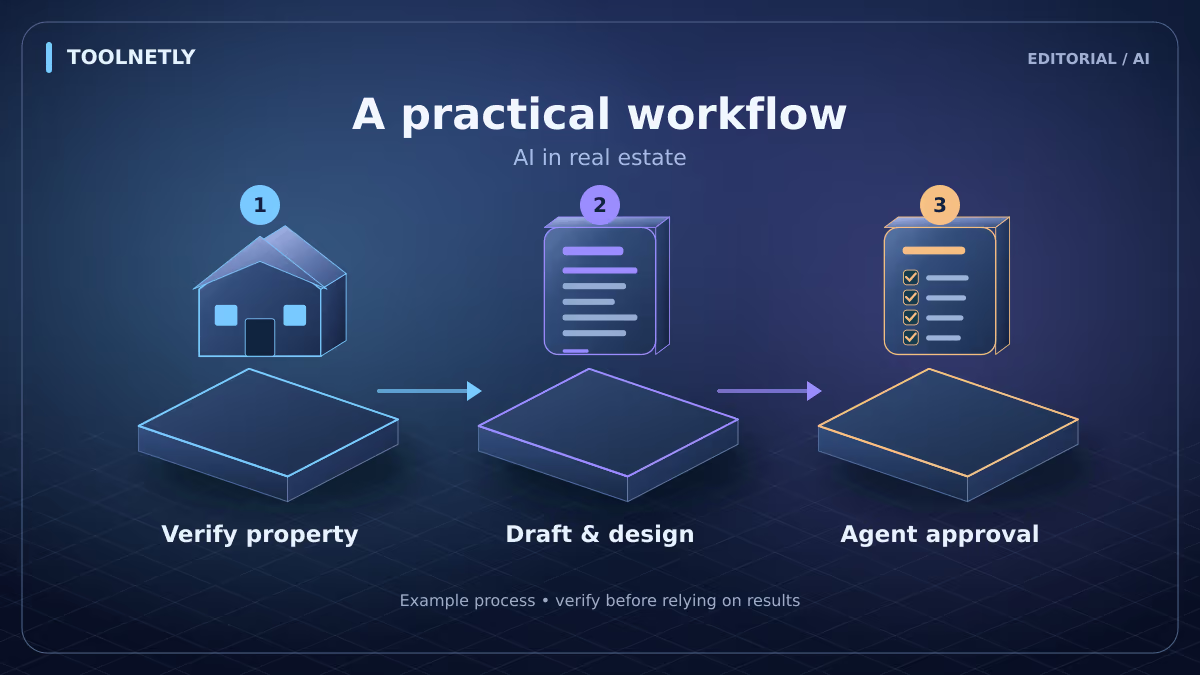
Verify property → Draft & design → Agent approval
Create a verified fact sheet: property type, location, number of rooms, measured floor area, confirmed amenities, viewing arrangements and restrictions. Use a writing assistant to produce a short description that only uses the supplied facts. Ask it to flag missing information instead of adding adjectives that imply unverified features.
Example prompt: “Write a 120-word property listing from these verified facts. Do not invent measurements, distances, school quality, views, renovation dates or investment returns. Put missing facts in a separate checklist.”
A staff member should compare the output with the original property documents before publication.
2. Prepare marketing assets
Use Canva to organize authorized property photos into a flyer or presentation. Avoid generating images that conceal defects or make the actual property look materially different. If illustrative or virtual staging images are used, label them appropriately and follow local advertising rules.
3. Organize enquiries and follow-ups
A workflow tool such as Zapier can create a CRM record from a form, assign an internal task and prepare a response for approval. Use only necessary personal information. Avoid using AI to screen or exclude people based on protected characteristics or unsupported inferences.
4. Summarize client meetings and documents
Use an assistant to organize permitted notes into agreed actions, open questions and due dates. Keep signed agreements and the original documents as the authoritative records. Confirm any financial or legal statements with the relevant professional.
5. Research a property carefully
An indicative AI estimate is only one input. Compare reliable transaction records, verified property details and local market evidence, and seek qualified advice for decisions requiring formal valuation. Do not represent a generated estimate as a guaranteed sale price.
Choose the first workflow
A practical first pilot is listing-copy preparation from ten verified property records. Measure factual errors, editing time and whether the final output complies with your standards. If it works, move to enquiry routing or marketing. Check current prices and data-use terms before purchasing.
What to compare before introducing AI into an agency
A real estate agency handles many different tasks: preparing listings, responding to inquiries, scheduling visits, organizing documents and communicating with clients. AI is most useful when the input is already reliable, the outcome is reviewable and a person remains responsible for the result. A property transaction can have significant consequences, so start with a narrow administrative process.
Create a map of the tools and data you already use. Identify where the official property details live, where you store customer contacts and who can approve marketing material. This is more useful than starting with a long list of AI subscriptions.
Listing copy: use an approved fact sheet
Prepare a standard listing input form with property type, verified location, room count, floor area and measurement source, confirmed amenities, authorized photos, viewing arrangements and the person responsible for approval. Leave unknown fields blank rather than making a plausible guess.
Use ChatGPT or Claude to draft a description from those fields. Ask the assistant to keep factual statements separate from suggestions for missing information. If the source only says that a property has a garden, do not add a private south-facing garden or a recently renovated terrace. If a travel time is required, verify it independently and describe the measurement conditions.
A second staff member should compare the draft with the approved record. Check price, currency, units and whether any claim could be misleading. Save the final approved copy alongside the source record so later edits can be traced.
Property marketing: build reusable assets without misrepresentation
A design tool such as Canva can help an agent prepare a consistent brochure, email header or presentation. Establish a brand template containing typography, contact information, disclaimer space and image layout. Use photographs that you have permission to publish.
If you create a conceptual rendering or virtual staging image, ensure it is not confused with an actual photograph of the property. Make clear what is illustrative, and do not use generated content to conceal damage or misrepresent the condition. Check the relevant listing platform and local advertising rules before publishing.
For a multilingual listing, maintain one verified source of factual information. A translation should preserve measurements and qualifications. Have a fluent reviewer check important descriptions and avoid relying on automatic translation for contract terms.
Enquiry automation: route requests, not people
Consider a workflow that receives a property inquiry, stores it in the approved CRM, notifies the responsible agent and prepares a response. Give the AI a limited task, such as classifying a question as viewing availability, property information or a request for a callback. The classification should concern the inquiry, not make a decision about the person seeking housing.
Use a stable inquiry identifier so duplicate submissions do not create duplicate records. If the message includes a question not covered by your approved information, route it to an agent. Never let the assistant invent availability, price concessions or an agreement.
Check the automation platform's permissions and current integrations before connecting a live CRM. Use fictional records in the pilot. Keep the original inquiry available even when the classification step fails. Our Make vs Zapier comparison provides an example of testing such a workflow.
Example: a practical week in a small agency
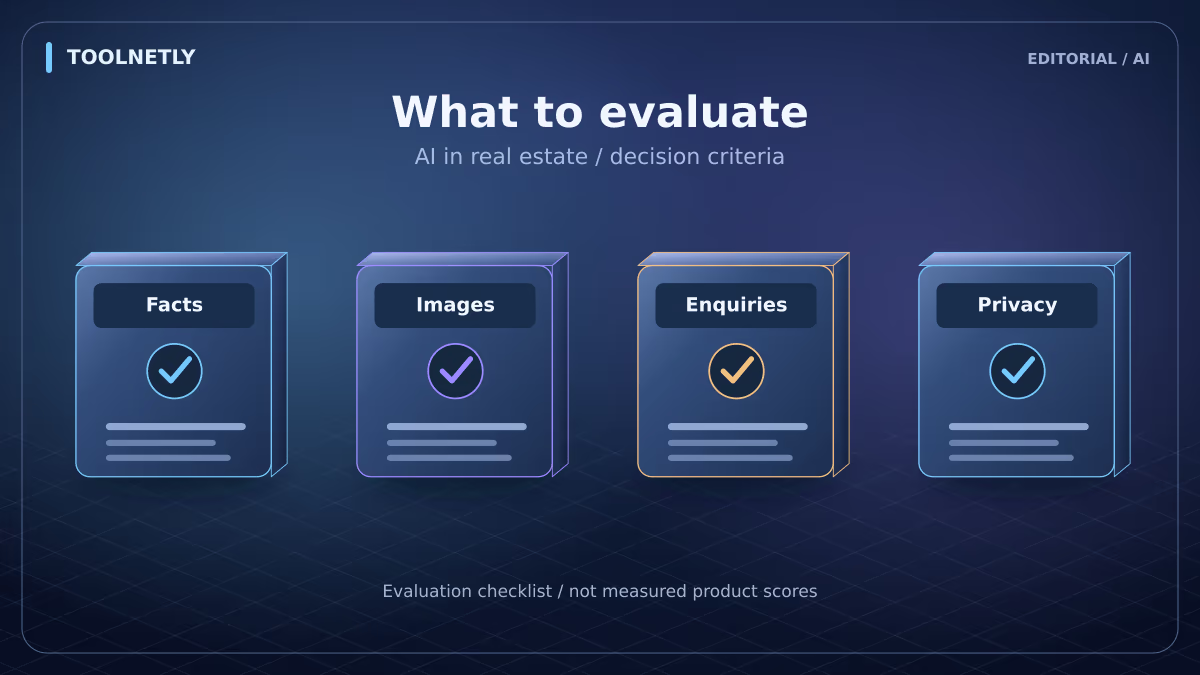
Evaluation criteria: Facts, Images, Enquiries, Privacy. The illustration does not represent measured scores.
| Day | Work | AI-assisted step | Approval |
|---|---|---|---|
| Monday | New listing intake | Organize verified details into a draft | Agent checks all property facts |
| Tuesday | Marketing preparation | Design a brochure from authorized assets | Review image accuracy and rights |
| Wednesday | New inquiries | Categorize requests and prepare responses | Agent approves every outgoing message |
| Thursday | Client follow-up | Organize meeting notes and actions | Confirm decisions and deadlines |
| Friday | Process review | Summarize recurring administrative issues | Manager verifies records and assigns changes |
This schedule is an example, not a promise of time savings. Choose the first process based on your agency's actual workload.
Evaluate a property research tool responsibly
A service that provides indicative property information can help you organize a preliminary investigation. The important questions are where the information comes from, how current it is, what geographic coverage it has and what assumptions are used. RealTeasy should be evaluated against the provider's documented coverage and terms, not presented as a replacement for an independent professional valuation.
If an estimate differs from recent comparable transactions, investigate the difference. The property may have unique characteristics, condition issues or insufficient source data. Do not publish a generated figure as an assured market value or rely on it alone when giving consequential financial advice.
Keep formal documents and appropriately qualified professional assessments as the authoritative records for transactions. A general assistant can summarize permitted notes, but it cannot establish that a contract, ownership claim or valuation is valid.
A pilot scorecard for the agency
Test ten fictional or authorized listings before changing the production process. Record the number of factual errors, time required for correction, missing source fields and whether the final listing meets your review standards. For inquiries, record how often the classification is correct and how many cases require escalation.
Include examples with an incomplete fact sheet, inconsistent measurements, an unavailable viewing time and a question about an unsupported claim. The assistant should flag the missing information rather than fill it in.
Measure the time from intake to approved output, not the time needed to produce the first draft. Include subscription, staff training and maintenance costs. If the first workflow does not reduce effort while preserving quality, simplify it or keep it manual.
Frequently asked questions
Can AI write real estate listings?
Yes, it can help draft language from verified property details. A person should check all factual claims, measurements, amenities, price and advertising requirements before publishing.
Can AI create real estate photos?
It can create illustrative or staged visuals. They must not misrepresent the actual property. Use authorized source assets and disclose generated or illustrative material as appropriate under the applicable rules.
Can AI estimate a home's value?
Some services provide indicative estimates. These are not guaranteed sale prices or a substitute for qualified valuation. Check the sources, location coverage and limitations and seek appropriate professional advice.
Can an AI assistant screen tenants or buyers?
Do not use AI to make exclusionary housing decisions based on protected characteristics or unsupported personal inferences. Follow applicable housing and privacy rules and maintain appropriate human oversight.
Which tool should an agency try first?
If writing listings is the main bottleneck, begin with a general writing assistant and a verified input template. If the issue is repetitive CRM data entry, evaluate a workflow tool. Choose one narrow task before buying multiple subscriptions.
Is it safe to upload contracts and customer documents?
Only use services and accounts authorized for that information. Review confidentiality obligations, retention, access permissions and provider terms. Avoid sending unnecessary personal information.
For other business use cases, read AI tools for small business and Zapier alternatives.
Sources: ChatGPT, Claude, Canva real estate templates, Zapier, RealTeasy. General product capabilities checked against provider materials November 12, 2026; RealTeasy information follows the existing owner-approved directory entry and should be rechecked. This guide is not valuation, financial or legal advice.